Railway Communications: Preparing for the Transition from GSM-R to FRMCS
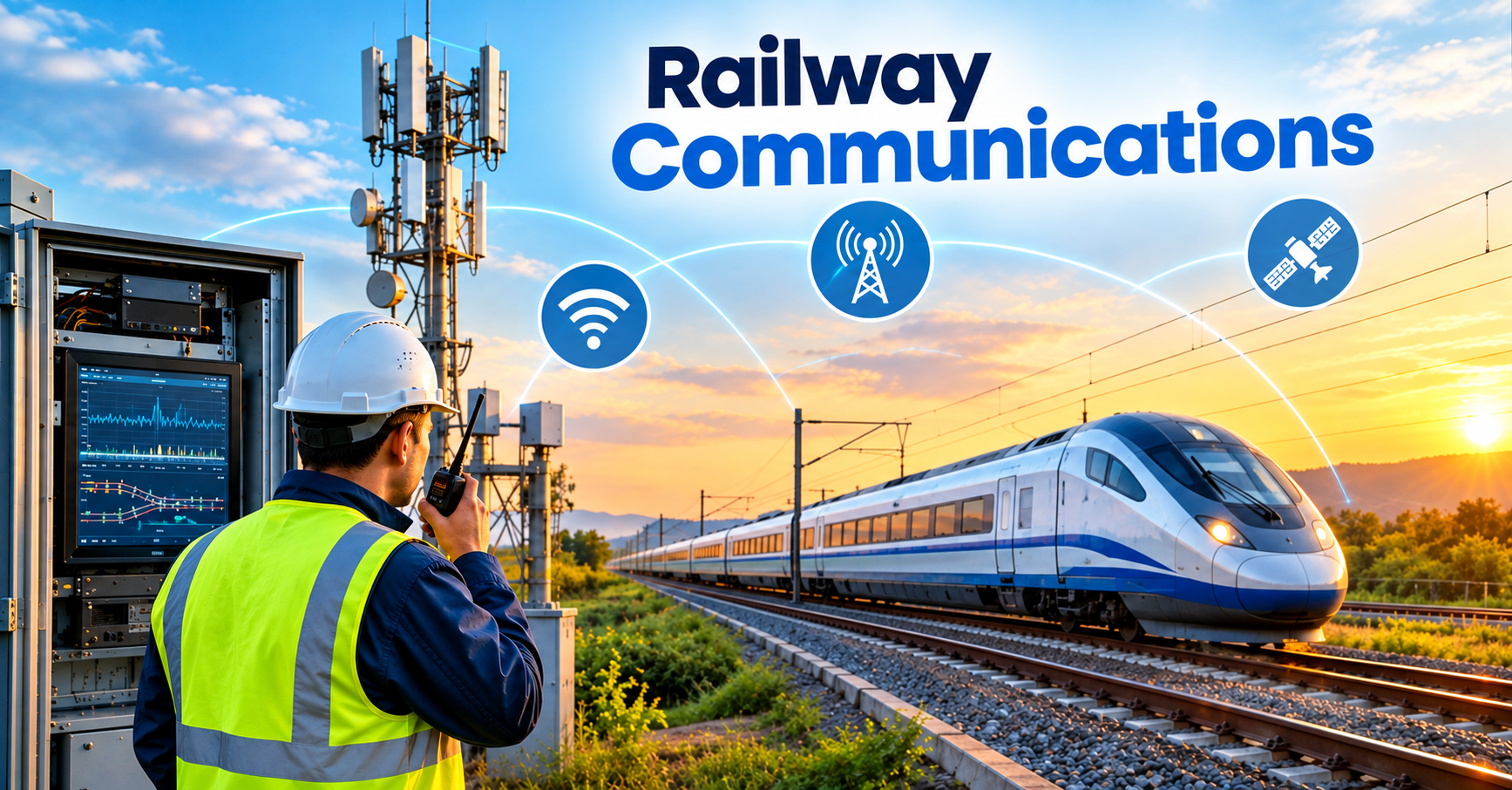
Railway communications are far more than radios and signals. They are the digital nervous system of a modern railway—connecting train drivers, signallers, controllers, stations, maintenance teams, emergency services, operational systems and increasingly, automated and data-driven applications.
When these systems work well, they are almost invisible. When they fail, the consequences can quickly affect safety, service reliability, passenger information, incident response and network performance.
The sector is now approaching one of its most significant communications changes in decades: the transition from the Global System for Mobile Communications–Railway, or GSM-R, to the Future Railway Mobile Communication System (FRMCS). This is not simply a replacement of one radio technology with another. It is a complex, multi-year transformation that requires railways to sustain aging GSM-R assets while preparing their people, processes, infrastructure and assurance frameworks for a 5G-based future.
At Innova Communications Australasia—known as Innova—we help railway owners, operators and delivery organisations manage both sides of that challenge: keeping today’s mission-critical railway communications safe and supportable while building a practical pathway to FRMCS.
What Do Railway Communications Include?
Railway communications cover the systems, networks and interfaces that enable safe, coordinated and efficient railway operations. Depending on the network, these may include:
- train-to-ground voice and data communications;
- driver, controller and dispatcher communications;
- emergency, group and priority calls;
- GSM-R radio access, core and transmission networks;
- onboard cab radios, antennas and related train systems;
- signalling and train control communications, including interfaces supporting ETCS;
- station communications, public address, passenger information and help points;
- operational control and management systems;
- CCTV, access control and security networks;
- fibre, IP/MPLS, radio and telecommunications infrastructure;
- network management, monitoring and fault response systems; and
- cyber security, resilience and business continuity controls.
This is why railway communications cannot be engineered in isolation. They must operate as part of an integrated railway system, with clear interfaces between technology, operations, rolling stock, signalling, safety, cyber security, asset management and emergency management.
Why Is the Railway Industry Moving Beyond GSM-R?
GSM-R has been highly successful as a standardised, interoperable platform for operational railway voice and data communications. However, it is based on second-generation mobile technology and is now facing increasing obsolescence pressure.
Railways must plan for diminishing component availability, ageing hardware and software, reduced specialist capability, escalating support costs and growing cyber security exposure. The wider telecommunications market has already moved well beyond 2G, which means the railway sector cannot assume that GSM-R products, repair capability, laboratories, spares and vendor support will remain readily available indefinitely.
The International Union of Railways identifies FRMCS as the successor to GSM-R, while the European Union Agency for Railways notes that supplier support for GSM-R is expected at least until 2030 and that a smooth transition must address the technology’s obsolescence risk. The transition will therefore be gradual, with GSM-R and FRMCS expected to coexist during migration rather than change over on a single date.
For railway organisations, the planning window is not distant—it is already open.
What Is FRMCS?
FRMCS is the next-generation global communications framework being developed for rail. It is based on modern mobile telecommunications standards, including 5G, and is intended to separate railway applications from the underlying communications bearer more effectively than GSM-R.
In practical terms, FRMCS is designed to provide a flexible platform for mission-critical voice and data services while supporting the railway’s growing need for secure, high-performance connectivity. In addition to carrying existing operational functions, it is expected to support and enable applications such as:
- mission-critical voice, data and video;
- European Train Control System communications;
- Automatic Train Operation;
- real-time train and infrastructure monitoring;
- remote diagnostics and condition-based maintenance;
- enhanced operational video and situational awareness;
- connected worker applications;
- richer passenger and operational information; and
- future digital railway services not yet practical over GSM-R.
FRMCS should not, however, be treated as “5G for trains” alone. It is an end-to-end operational communications environment involving railway applications, service layers, core networks, radio access, spectrum, onboard gateways and radios, trackside infrastructure, control centres, cyber controls and operational procedures.
The Real Challenge: Sustaining GSM-R While Preparing for FRMCS
The immediate challenge for many railway organisations is a dual obligation.
First, the existing GSM-R network must remain safe, reliable, cyber-secure and supportable for as long as operations depend on it. Second, the railway must prepare for FRMCS without prematurely investing in solutions that may not align with evolving standards, spectrum arrangements, operational requirements or deployment timing.
This creates several difficult planning questions:
- How long must the GSM-R network remain operational?
- Which assets require renewal, refurbishment or strategic spares?
- Can vendor support be extended, diversified or supplemented?
- Which investments preserve a future migration path and which create stranded assets?
- When should onboard fleets, control centres and trackside infrastructure be upgraded?
- How will GSM-R and FRMCS interwork during the transition?
- Which applications should migrate first?
- How will safety, interoperability and operational readiness be demonstrated?
- What spectrum, coverage, capacity and resilience will the future network require?
There is no universal answer. The right strategy depends on the railway’s current architecture, asset condition, operational risk, signalling roadmap, rolling-stock program, spectrum environment, commercial position and appetite for change.
Key GSM-R to FRMCS Migration Challenges
1. Obsolescence and supportability
Legacy GSM-R networks can remain operational for many years, but only if obsolescence is actively managed. Railways need an evidence-based view of asset condition, failure trends, software dependencies, repair capability, spares holdings, vendor roadmaps and single points of failure.
A robust sustainment strategy may include life-extension works, strategic spares, alternative repair channels, targeted technology refreshes, specialist training and revised support arrangements. The objective is not to prolong every asset at any cost; it is to protect safe operations and preserve flexibility until migration is achievable.
2. Migration without service disruption
Mission-critical railway communications cannot simply be switched off while a replacement is installed. GSM-R and FRMCS are likely to operate in parallel during a staged transition involving infrastructure, control centres and rolling stock.
This requires careful sequencing, configuration control, interface management, test environments, operational trials, cutover planning, rollback arrangements and contingency communications. The migration strategy must also account for fleet availability, depot access, installation capacity and the limited windows available for railway testing and commissioning.
3. Onboard fleet complexity
Onboard migration is often one of the largest and most operationally constrained parts of the program. Different fleets may have different radio equipment, train interfaces, installation constraints, certification baselines and remaining service lives.
Railways must consider whether to retrofit, replace or introduce dual-mode capability; how to manage antennas and onboard gateways; how software will be securely configured and updated; and how train modifications will be tested, assured and deployed without reducing fleet availability.
4. Coverage, capacity and spectrum
Operational railway communications demand more than general mobile coverage. The network must be engineered for rail corridors, tunnels, stations, cuttings, depots and other challenging environments, with performance appropriate to safety-related and mission-critical services.
RF planning must address spectrum, interference, handover, capacity, availability, resilience and application performance. Where public carrier services or multiple bearers form part of the solution, the railway must also understand the limits of service priority, coverage control, failure independence and operational accountability.
5. Integration with signalling and operational systems
FRMCS will interact with a broad ecosystem of railway systems. These may include ETCS, Automatic Train Operation, dispatching, control centre applications, network management, voice recording, train management, asset monitoring and emergency management.
Successful migration therefore depends on disciplined systems engineering: defined requirements, controlled interfaces, traceability, verification, validation and end-to-end testing. A technically compliant radio network is not enough if the operational service fails at an application boundary.
6. Cyber security
The move from a relatively closed, circuit-oriented environment to an IP-based, software-driven and increasingly connected architecture changes the cyber risk profile.
Security must be designed into the railway communications architecture from the beginning. This includes network segmentation, secure remote access, identity and privileged-access management, encryption, hardening, vulnerability management, logging and monitoring, incident response, supply-chain risk and secure software lifecycle practices. Relevant frameworks may include IEC 62443, TS 50701 and applicable national critical-infrastructure and privacy obligations.
7. Safety assurance and operational change
Railway communications support safety-critical operational decisions. Changes to call handling, priority, coverage, human-machine interfaces, degraded modes or emergency procedures can affect operational risk even where the underlying technology performs as designed.
FRMCS transition programs therefore require integrated systems and safety assurance, supported by hazard analysis, requirements traceability, human-factors consideration, testing and evidence-based acceptance. Operational readiness, training, maintenance procedures and competence management are as important as technical commissioning.
8. Commercial and whole-of-life value
A migration roadmap must be technically sound and commercially realistic. Railways need to balance near-term GSM-R sustainment expenditure with future FRMCS investment, avoiding both unmanaged obsolescence and premature replacement.
Clear asset baselines, option analysis, cost and risk modelling, procurement strategy and supplier engagement can improve value for money. They also help decision-makers distinguish essential life-extension work from investments that genuinely enable the future state.
How Innova Supports Railway Communications and FRMCS Readiness
Innova is an independent Australian engineering and consulting company with more than 25 years of experience across telecommunications, operational control and management systems, radio, cyber security, systems assurance, safety assurance, risk and asset management.
Our senior consultants bring deep railway and mission-critical communications experience. We understand both the technology and the operational environment in which it must perform.
We support clients across the railway communications lifecycle, including:
- current-state GSM-R and railway communications architecture assessments;
- GSM-R sustainment, obsolescence and asset-support strategies;
- strategic spares, repair capability and alternative supply-chain assessments;
- vendor support, maintenance and commercial strategy;
- FRMCS readiness assessments and staged migration roadmaps;
- 4G, 5G, MCX and FRMCS option analysis;
- spectrum strategy, RF planning and coverage assurance;
- onboard radio, control centre and trackside migration planning;
- operational communications and dispatcher integration;
- ETCS and broader railway-system interface management;
- cyber security architecture and uplift aligned with IEC 62443 and TS 50701;
- systems engineering, RAMS and safety assurance aligned with the EN 50126, EN 50128 and EN 50129 lifecycle;
- requirements, integration, testing, commissioning and operational-readiness planning;
- whole-of-life cost, risk and value-for-money analysis; and
- program governance, stakeholder alignment and independent technical assurance.
Our role is not to promote a predetermined product. We provide independent, evidence-based advice that helps clients make informed decisions, manage risk and develop an achievable transition pathway.
A Practical Railway Communications Transition Starts Now
Railways do not need every detail of their final FRMCS solution resolved before acting. They do need a clear plan.
The strongest programs begin by establishing the current asset, support and risk position; identifying critical decision dates; protecting the existing GSM-R service; defining the target operational capabilities; and developing a staged roadmap that aligns communications, signalling, rolling stock, cyber security, safety assurance and investment planning.
Done well, the transition to FRMCS can deliver much more than the replacement of an ageing radio network. It can create a secure and adaptable communications platform for safer operations, better network visibility, more effective maintenance, increased automation and a genuinely connected digital railway.
Talk to Innova About Your Railway Communications Strategy
Whether your organisation needs to extend the safe life of an existing GSM-R network, assess FRMCS readiness, develop a transition roadmap or independently assure a proposed solution, Innova can help.
Contact Innova Communications Australasia to discuss how we can support the sustainment and future transformation of your railway communications environment.
Frequently Asked Questions
What are railway communications?
Voice, data, radio, and operational systems linking drivers, controllers, signalling, and emergency responders, integrated with railway operations and safety.
What is GSM-R?
Railway-specific 2G mobile communications for operational voice and data, part of ERTMS, being replaced by FRMCS because of obsolescence.
What is FRMCS?
Future Railway Mobile Communication System, a next-generation railway framework based on 5G, supporting mission-critical voice, data, and video services.
When will FRMCS replace GSM-R?
No single global date; timelines vary, with phased migration and coexistence, so railways should plan sustainment and transition now.
Is FRMCS simply a 5G radio network for railways?
No. It is an end-to-end framework covering applications, services, networks, onboard and trackside systems, interfaces, cyber security, and procedures.
What should a railway do first to prepare for FRMCS?
Start with readiness and risk assessment of GSM-R, assets, spectrum, fleets, and cyber posture, enabling a staged migration roadmap.
How can Innova assist with railway communications?
Innova provides independent engineering and advisory support across GSM-R sustainment, FRMCS readiness, migration, spectrum, cyber security, and safety assurance.